The Shopping List Beyond the Box
Starter Set 01 already contains the map, terrain, dice, tokens, cards, rules and six miniatures. You still need side cutters to remove parts from the runner, and a hobby knife or sanding stick to clean nubs. Everything else is optional.
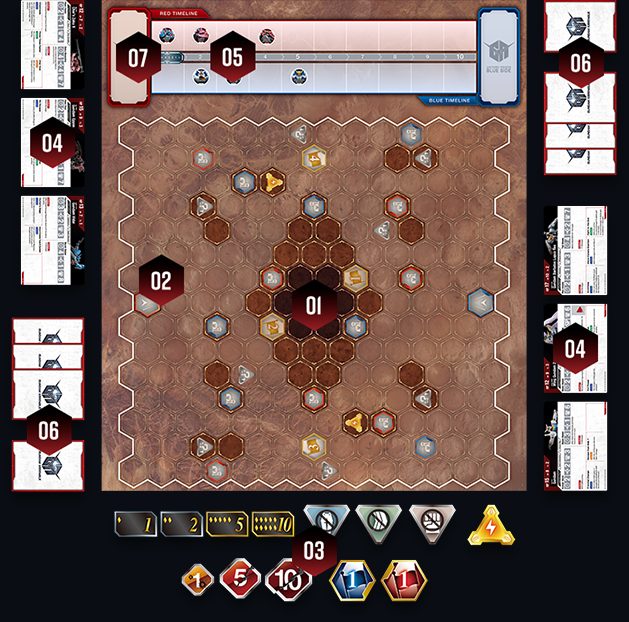
The starter set is unusually complete: map, terrain, dice, tokens, cards, rules and six models. The shopping list beyond the box is short, and most of it is about the models rather than the game.
Already in the box
| Needed for play | In Starter Set 01 |
| Game board | 1 map |
| Terrain | Paper terrain sheet |
| Dice | 10-sided dice set |
| Tokens | Round token, objective and status tokens |
| Cards | 6 unit cards, 18 Tactics cards, 2 Scenario Objective cards |
| Rules | Handbook plus 2 quick-reference tables |
| Miniatures | 6, unpainted, snap-fit |
|---|
That is a playable two-player game. Nothing in the rules requires anything else.
The four things you actually buy
Side cutters (nippers). The miniatures are on runners. You can twist parts off, and you will tear the plastic doing it. A basic pair costs $8 to $15 and lasts years.
A hobby knife or sanding stick. Nippers leave a small nub where the part met the runner. A sharp blade or a fine sanding stick takes it flush in a few seconds per part.
A cutting surface. A cheap self-healing mat protects the table and stops parts rolling away. A sheet of cardboard works.
The list ends there. Budget $15 to $25 if you own no tools at all.
Optional extras
- Paint and primer. The rules treat miniatures as playable unpainted. If you want to paint, see painting and panel lining.
- A play mat. The paper map works; a mat just stops it sliding.
- Card sleeves. Eighteen Tactics cards shuffle better sleeved, but they are standard thickness and survive a few dozen games bare.
- Dice tray. Attack pools reach six dice. A tray keeps them on the table.
Skip these
- Glue. The models are snap-fit. Glue is for conversions, not assembly.
- A second starter set for two players. One box covers both sides.
- Expansion packs to play a legal game. Fifteen unit cards exist, but the starter's six are a complete 3v3.
- A codex or army book. There is no equivalent; each unit's rules are on its card.
Time and space
Setup takes about ten minutes once you know the steps; the setup guide turns it into a checklist. Table space is roughly 90 by 75 cm for a starter game with cards and dice out.
Assembly is the variable. A 50 mm snap-fit unit takes 15 to 25 minutes for a first-timer. Six models is an evening, not a weekend.
The order to do things
- Open the box and check the token sheet against the scenario sheet.
- Build the six miniatures - cut, clean, dry-fit, snap.
- Play the first teaching scenario with unpainted models.
- Panel line or paint once you know you like the game.
- Buy an expansion pack when you want a different squad, not before.
That order keeps the entry cost at the box price plus tools, and it puts the painting decision after the first game rather than before it. If you are still deciding which box, starter vs deluxe is the comparison to read.
The second player brings nothing
Nothing. A two-player game is one box plus tools. The second player does not need their own miniatures, cards or dice - the starter set splits six miniatures, eighteen Tactics cards and the token pool between both sides.
Where groups do buy a second box is variety: two starter sets give you twelve miniatures and two copies of the card pool, which makes mirror matches possible without arguing over who plays which unit. A collection decision, not a requirement.
Storage and transport
The models are small but the antenna and V-fin are fragile. A compartment box with 40 mm slots holds a full starter set; a foam tray is better if you travel with them. The tokens and cards fit in a single bag, and the map folds down to A3.
Playing at a shop? Buy a dice tray early. Attack pools reach six dice and a dropped d10 under a table is a two-minute interruption every time.